
The Scope: What a Pool Inspection Covers
A professional swimming pool evaluation is a non-destructive, visual, and operational performance assessment of the accessible parts of the system. It typically centers on four main pillars, be sure to confirm with your inspector exactly what they will be reporting on
1. Structural Integrity
Inspectors check the concrete gunite shell, interior plaster/aggregate finish, waterline tiles, coping stones, and the surrounding deck interface for visible cracks, shifting, or uneven settlement. They specifically verify the expansion mastic—the flexible sealant between the pool coping and the concrete deck. If this mastic is dried out or missing, deck water can seep underneath, leading to soil erosion, deck heaving, and major shell cracking.
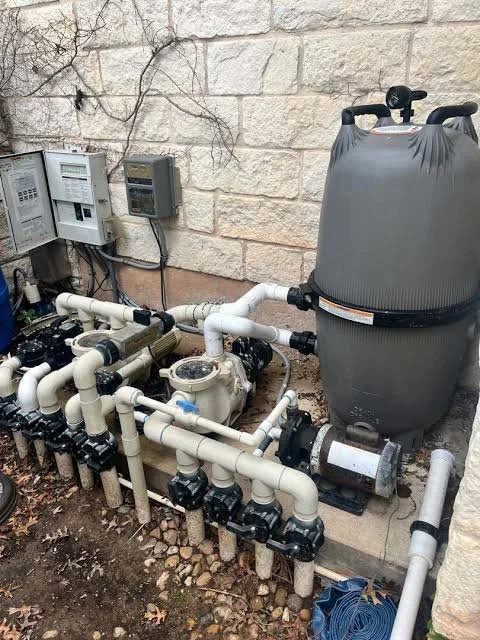
2. Mechanical Systems
The inspector will run the primary equipment under normal operational modes. This includes checking circulation pumps for casing leaks or noisy bearings, reading filtration pressure gauges (high pressure indicates a clogged filter; low pressure indicates a blockage or damaged pump impeller), and firing up pool heaters to verify safe ignition, combustion, and gas line venting.
3. Electrical Safety
Water and electricity are a deadly combination. Inspectors test all pool-related circuits (underwater lights, pumps, and blowers) using specialized external diagnostic tools to ensure functional Ground-Fault Circuit Interrupters (GFCIs) trigger properly. They also inspect the equipment bonding grid, verifying that a solid copper conductor safely ties all metal components together to prevent electrical shock.
4. Safety Barriers and Enclosures
Pool fences must comply with Texas Health and Safety Code Chapter 757 alongside localized municipal adjustments:
Height: Fences must stand at least 48 inches (4 feet) tall from the exterior side.
Gates: Access gates must open outward (away from the pool yard) and feature self-closing and self-latching hardware.
Latches: Release mechanisms must be installed at least 60 inches (5 feet) above the ground.
Residential Access: Any doors or windows opening directly to the pool yard must be secured with permanent audible alarms certified under UL 2017.