
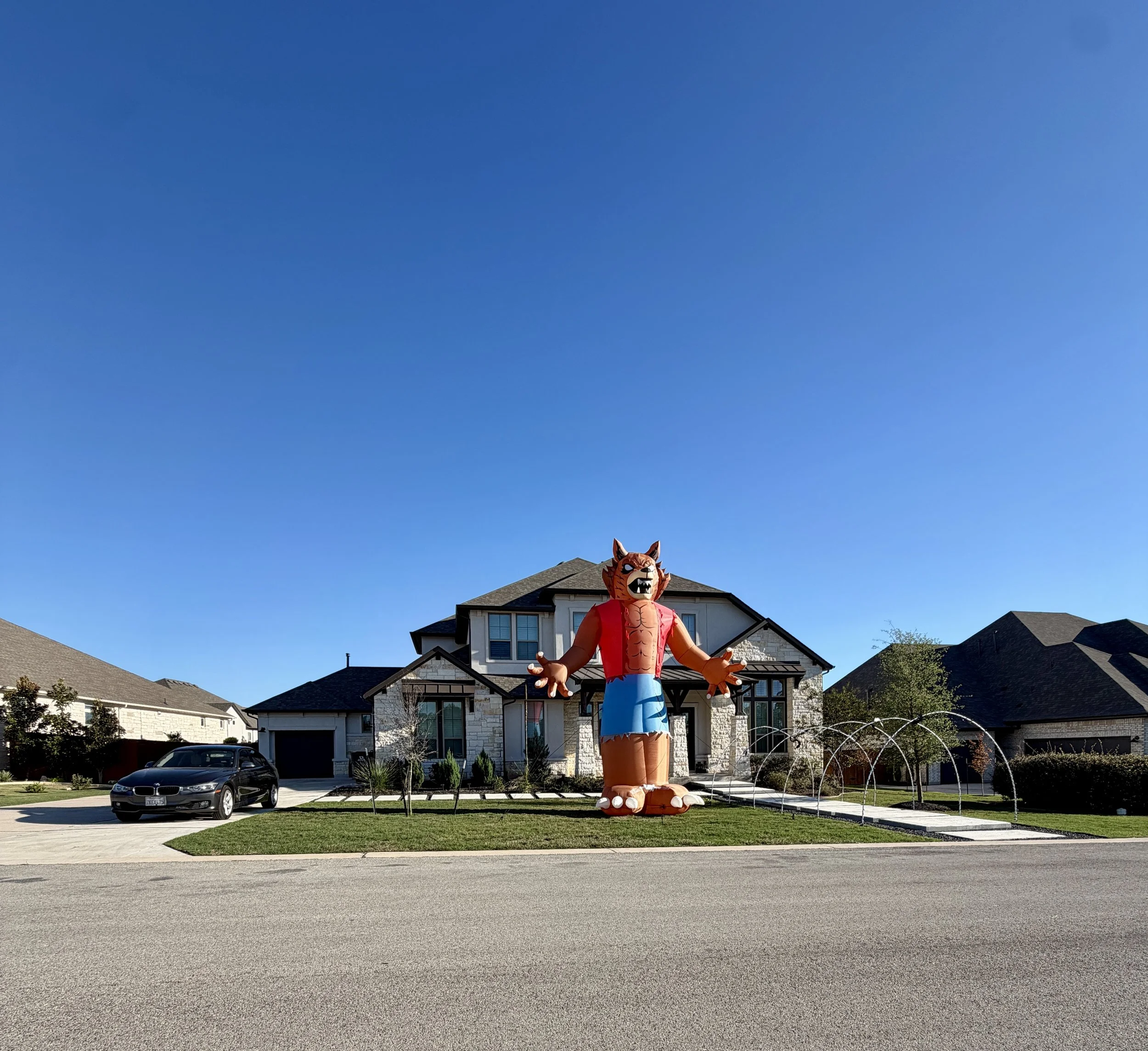
Halloween Decorations in Caliterra in Dripping Springs, Texas
Every October, a few streets in the Hill Country turn into an unofficial theater. A twelve-foot skeleton goes up on one lawn, a neighbor answers with a graveyard, and by the last week of the month people are driving from other neighborhoods just to take a look.
If you're house hunting right now, those streets are giving you information you can't get from a listing. Halloween is one of the few times of year when a neighborhood shows you, in plain view, how its residents spend time, how they treat shared space, and how much of the community life actually happens outside.
Here's how to read it, and where to be careful not to read too much into it.
First, Some Context: Halloween Is Big Business
This isn't a niche hobby. About 42% of people surveyed plan to decorate.
So when you drive down a street and see almost no decorations at all, that's not unusual. And when you see a street where nearly every house is dressed up, that's a street where a lot of people are making an effort. The gap between those two is where the clues are.
5 Things Halloween Decorations Can Reveal
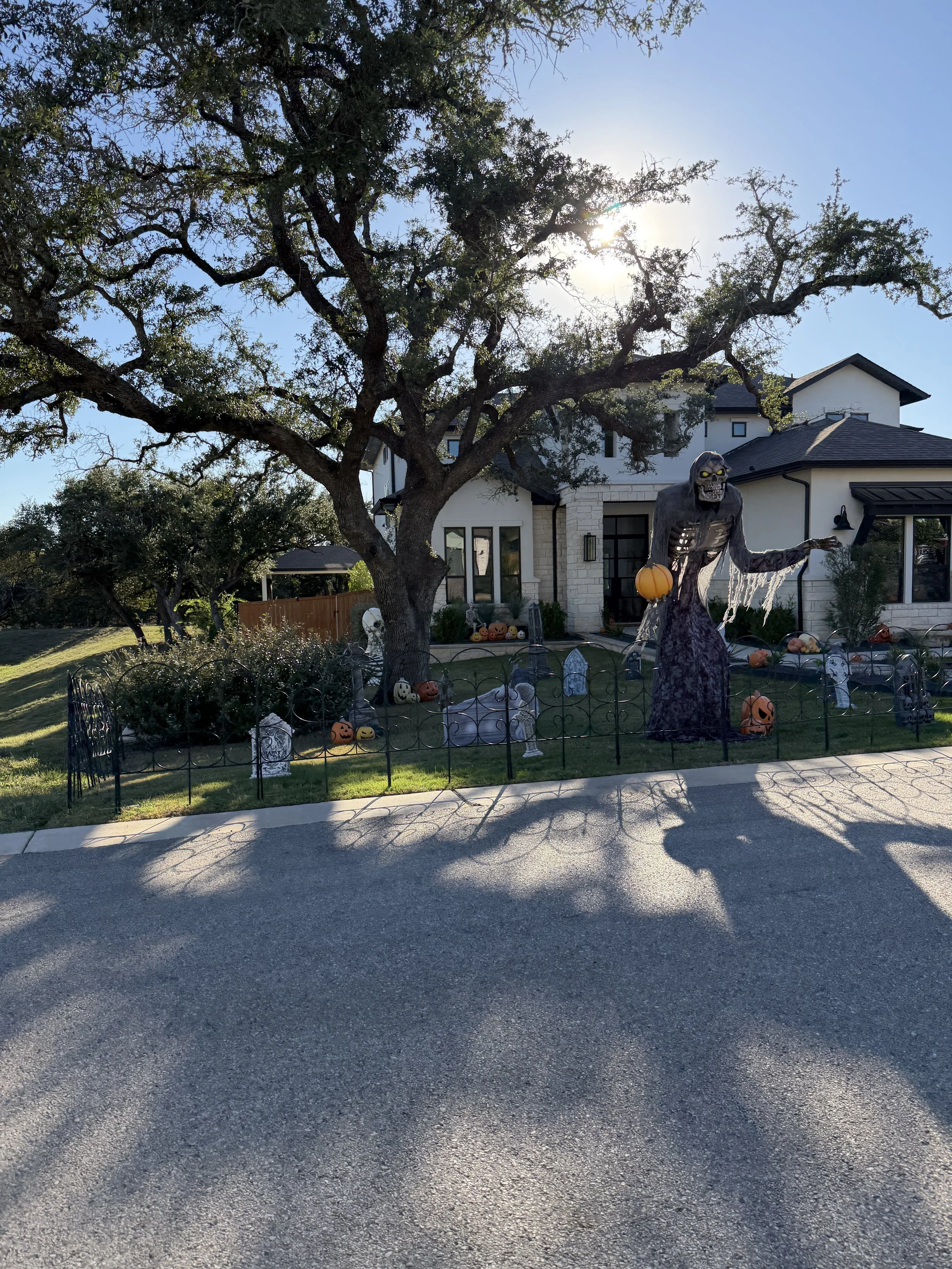
1. How much of the neighborhood life happens at the curb
Decorations are meant to be seen. A street full of them usually means people expect to be seen too: neighbors walking dogs, kids on bikes, families out in the evening. A street with almost nothing out, in a neighborhood where front doors face a quiet cul-de-sac, may simply be more private. Neither is better. It depends on what you want your Tuesday evenings to look like
.
2. Whether neighbors coordinate or compete (in a good way)
When one house goes big and the next three houses respond, you're looking at a street with relationships. That kind of friendly one-upmanship takes conversation. Contrast that with a street where decorations are scattered, one house here, nothing for three lots, then another, which often points to a neighborhood where people are friendly but not especially connected.
You can see the same thing at Christmas, and Dripping Springs has a long tradition there. The City and the Lions Club have run Christmas on Mercer for more than two decades, and it's a good reminder that this town takes seasonal community events seriously. If you're relocating, a neighborhood that decorates early and often for Halloween is a decent preview of how it will handle December.
3. How walkable and trick-or-treat-friendly it really is
This is the most practical clue. Look at the setup, not just the decor:
Sidewalks or a safe street edge. Are there sidewalks, or would kids be walking in the road?
Lot spacing, length of driveway. On larger Hill Country lots, front doors can sit hundreds of feet apart. Families in those areas often organize trunk-or-treats or caravans instead of door-to-door trick-or-treating.
Street lighting. Rural-feeling roads in Driftwood or outside the city limits can be very dark at 7 p.m. in late October. That's a charm to some buyers and a dealbreaker to others.
Traffic. Is it a through street or a dead end?
If you have kids, or plan to, ask yourself how Halloween night would actually work here. Is that even a big deal to you?
4. What the HOA allows (and how it's enforced)
Many Dripping Springs-area communities have HOAs, and HOAs often have rules about holiday displays: how early they can go up, how long they can stay, the size of inflatables, lighting, and sometimes what can be placed in front yards at all.
A neighborhood with big, elaborate displays tells you the rules are probably flexible or loosely enforced. A neighborhood with tidy, restrained porch pumpkins might be following stricter covenants, or might just have a quieter style. You can't tell from the street, so don't guess. Ask for the HOA's governing documents and read the section on exterior displays and decorations. It tells you a lot about how the community runs day to day, and it's one of the most overlooked documents in a purchase.
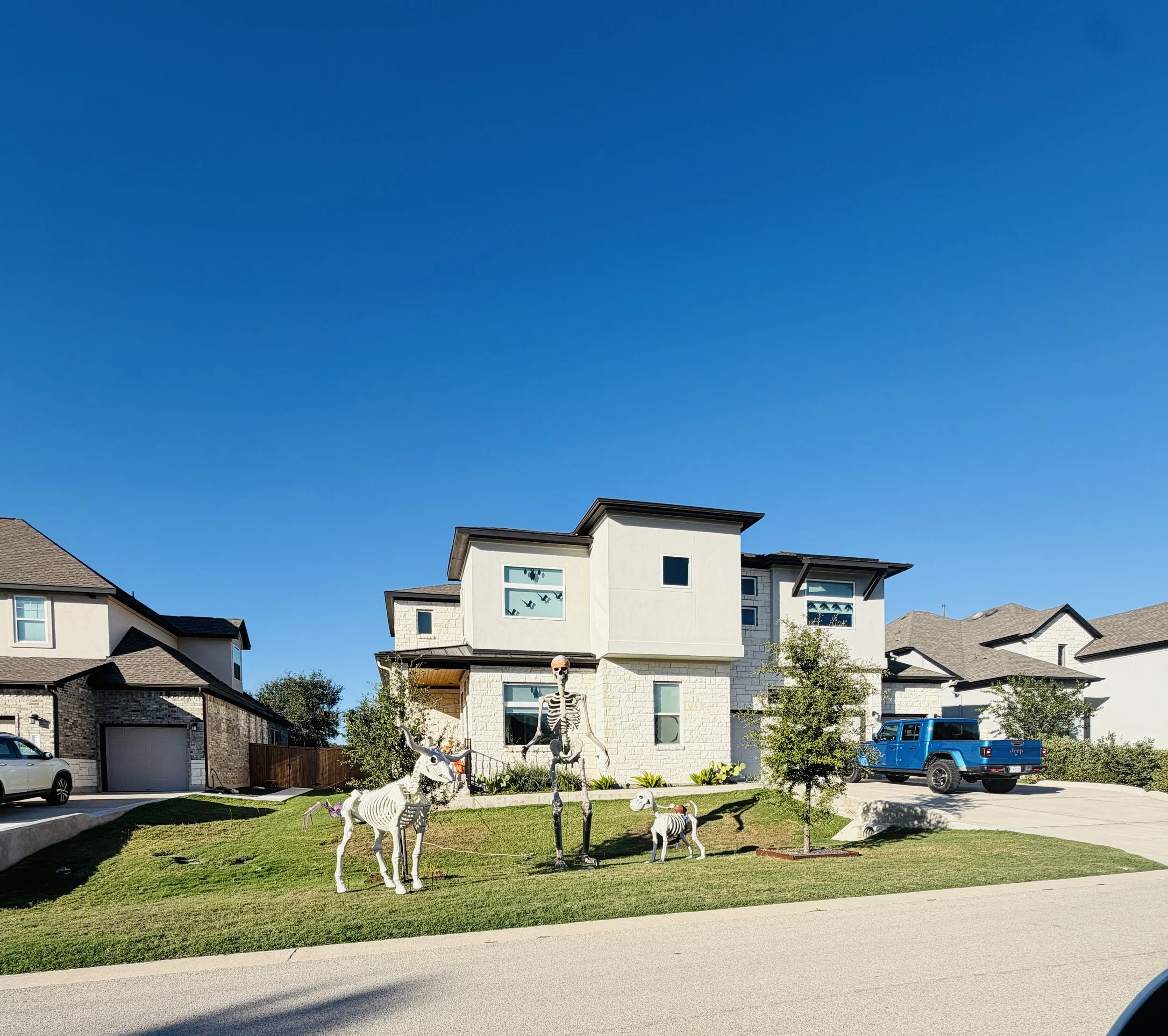
5. How much tolerance there is for noise and crowds
Fog machines, speakers, and lit-up yards draw visitors. In some neighborhoods, the Halloween house is a beloved tradition that draws cars from several streets over. If you're buying next door to it, that might be thrilling or exhausting. Take a drive by in the evening, not just the daytime, and see what the traffic and noise look like. Better yet, ask a neighbor.
What Decorations Can't Tell You
This part matters. Halloween decorations are one small clue about activity and engagement. They are not a measure of whether a neighborhood is "good," and they say nothing reliable about who lives there.
A sparsely decorated street might be full of residents who don't celebrate Halloween for personal, cultural, or religious reasons, or who work long hours, or who are new to the area. A neighborhood with big displays isn't automatically a better fit. Treat decorations as a conversation starter, not a verdict.
And a few things decorations will never replace:
School zoning. Existing school zones are a snapshot in time, not a permanent guarantee. Confirm the current DSISD attendance zone for any address you're considering.
Actual data. Sale prices, days on market, HOA fees, and tax rates tell you things a front yard can't.
Multiple visits. One drive-by in October is a data point, not a picture.
How to Use October to Your Advantage
If you're touring homes this month, here's a simple routine:
Drive the neighborhood twice. Once in daylight, once around dusk. Notice lighting, traffic, and who's outside.
Walk it if you can. Decorations look different at walking speed, and you'll notice sidewalks, driveways, and how close homes actually sit.
Say hello. If someone is out arranging a display, ask about the street. People who decorate tend to like talking about it, and you'll learn about trick-or-treat traditions, parking on busy nights, and how long they've lived there.
Ask for the HOA documents and read what they say about exterior displays and seasonal decorations.
Come back in December. See whether the same streets light up again. If they do, you've found a neighborhood that celebrates together.
Choosing where to live is partly about numbers and partly about how a place feels on an ordinary evening. October just happens to make that feeling visible.
Want help finding a neighborhood that fits the way you actually live? Let's find it! Schedule a conversation with me.
All data and information and advice is deemed accurate and reliable but not guaranteed and should always be independently verified.