
Please sure to verify all important information with your licensed tax professional.
Property Tax in Texas
IMPORTANT INFORMATION:
2026 CHANGES
Texas Homestead Exemption - information you need to know as a homeowner in the state of Texas.
As a real estate agent in Hays County, Texas, I am asked about property taxes all the time by both, buyers and sellers. While I am not a licensed tax professional and I always suggest that you contact tax consultant to verify any important information, I do take it as my responsibility to know the most current information about something that will be a major financial factor for my clients for many, many years to come.
FAQ’s
Q: How do I check to see if I’ve received or missed one of these “every 5 years letters” (aka the Homestead Exemption confirmation or re-verification notice?
A: Check your property tax statement - usually this can be done online by going to your county’s appraisal district website. For homeowners in Hays County Texas, go here.
Q: What should I do if I don’t see the homestead exemption on my tax statement?
A: Immediately file a new Homestead Exemption application with the county appraisal district (Form 50-114).
Important Note:
If the exemption was removed in error and the homeowner was eligible the entire time, many districts allow the exemption to be retroactively reinstated (up to two prior years in many cases) once documentation is provided.
Q: Why are property taxes in Texas so much higher than the property taxes in many other states?
A: Texas property taxes are comparatively high largely because the state because there is no state income tax, which means local governments rely more heavily on property taxes to fund essential public services such as schools, police, roads, and emergency response.
Another key factor is the way public education is financed here. School districts account for the largest share of most property tax bills, and a significant portion of school funding comes from local property tax revenue rather than state-level funding sources. Because education represents a major ongoing public expense, districts often depend on property taxes to meet operating and infrastructure needs, which contributes to higher overall property tax rates compared with many other states. They also benefit from the passing of large Bonds, like this one in 2025 for the Dripping Springs Independent School District.
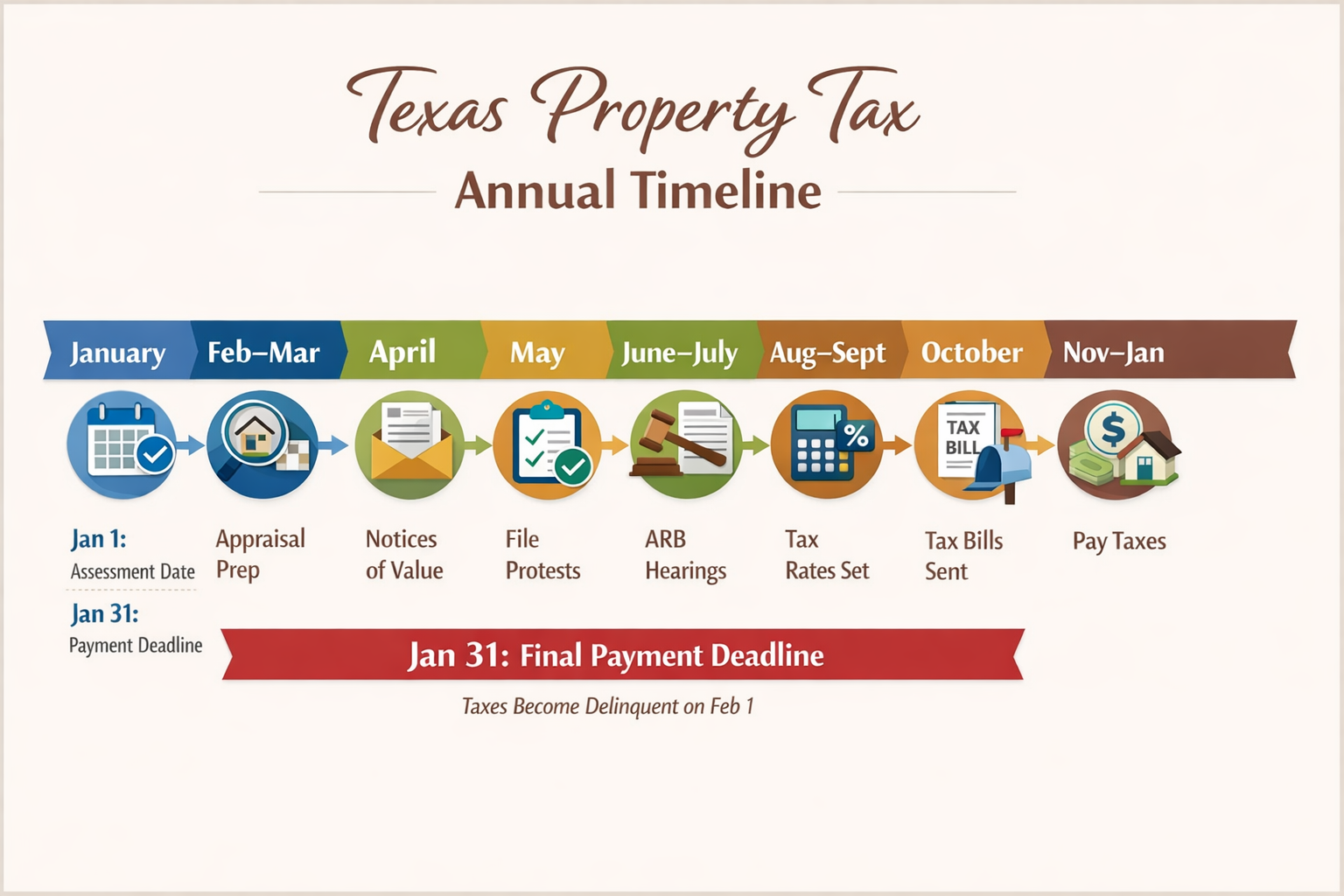
Q: When are property tax bills received?
A: Typically in October and early November.
Q: How is the amount of my property tax determined?\
A: Each year, the county appraisal district (CAD) estimates your property’s market value as of January 1 based on recent comparable sales, property characteristics, and market trends. After exemptions are applied, the remaining amount becomes your taxable value.
Q: How do I file a protest if I believe my property value is too high?
A: Homeowners may file a protest with their county appraisal district, typically by May 15 (or 30 days after receiving the Notice of Appraised Value). A hearing with the Appraisal Review Board (ARB) may then be scheduled.
Q: Will property be tax be included in my mortgage? How do are they handled?
A: Yes, if you mortgage your home purchase property taxes will be managed by the lender. Your lender collects a portion of your estimated property taxes each month and pays the tax bill on your behalf when it becomes due. Keep in mind, it’s an estimate, usually its rather close but you may end up owing more on upcoming mortgage payments than you had planned to offset any additional taxes owed.