
If you're looking at a newer home in Dripping Springs or Driftwood, you've probably run into the phrase "transferable warranty" on a listing, in a builder brochure, or in a seller's paperwork. Sometimes it means exactly what it says. Other times the clock started at the first owner's closing, a form has to be filed, or the coverage you were counting on ended two years before you arrived.
The short answer: Many Texas builder warranties can pass to the next owner, but only if the warranty document allows it and you take title while the term is still running. A home warranty the seller bought can usually be transferred too. The seller has to start that process, there's often a fee, and you inherit the plan's exclusions. Neither kind of warranty resets when the house sells.
This post is for buyers weighing a new build, a home that's only a few years old, or a resale where the seller is offering a home warranty, and who want to know what they could actually use.

Builder warranty vs. home warranty: two different promises
A builder warranty is a promise from the company that built the house. If the construction is defective, they repair it for a set period. Many builders back that promise with a third-party warranty company.
A home warranty is a different product. Texas law calls it a residential service contract, and it covers repair or replacement of systems and appliances that break down from normal wear. Residential service companies in Texas are licensed by the Texas Real Estate Commission under Chapter 1303 of the Occupations Code.
Homeowners insurance is a third thing. It pays for damage from events like fire or hail, not for defects or wear.
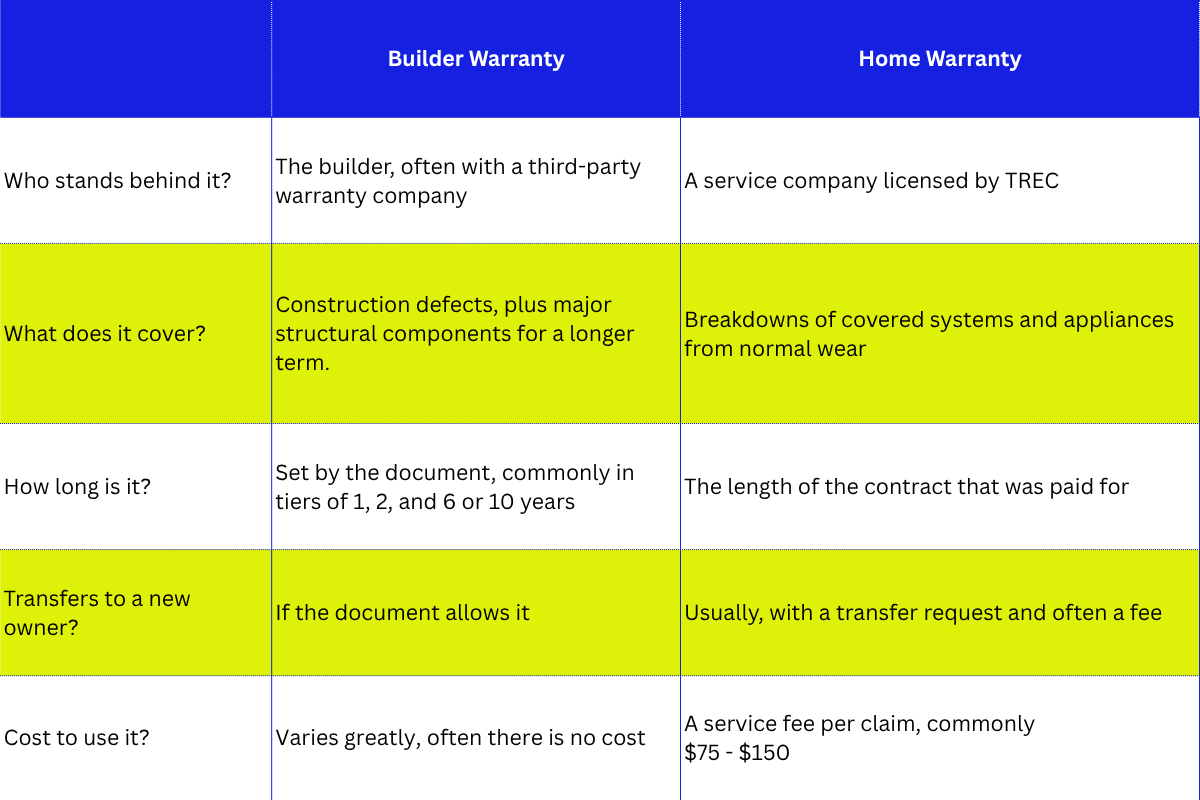
Comparison table of a builder warranty and a home warranty in Texas, covering who stands behind each, what each covers, how long each lasts, whether it transfers to a new owner, and what it costs to use
Do HVAC, roof, and appliance manufacturer warranties transfer too?
They follow their own rules, separate from the builder's. Trane's published terms for its registered limited warranty, for example, say a transfer has to happen within 90 days of the new homeowner's purchase and costs a one-time $99 fee. The Texas Association of Builders sample warranty says a manufacturer's warranty passes to the homeowner only if the manufacturer permits the transfer.
So ask the seller or builder for the list of manufacturer warranties, whether each one was registered, and the model and serial numbers. Then check each manufacturer's transfer window. Some are short.
Can a home warranty be transferred from the seller to the buyer?
Usually, but not automatically. The seller has to request the transfer, the plan has to still be active at closing, and the provider will need your name, contact details, and closing date. Transfer fees commonly run $25 to $50, and some companies charge more or waive them. You accept the plan as written, and coverage continues for the time already paid.
You may also have a choice. At least one provider, Landmark, says a buyer can cancel the seller's plan and apply the prorated amount to a plan they pick. If you'd rather choose your own coverage level, ask whether that's an option before closing.
What a home warranty won't cover
This is where buyers get surprised. Read the exclusions before you count on the plan.
Pre-existing conditions. Many contracts exclude a problem that existed before coverage began, even one nobody knew about. Some companies cover unknown conditions after a waiting period of around 30 days. A home inspection report that notes a failing system can also be used to deny a later claim on it.
Maintenance. If a claim traces back to missed upkeep, expect questions about your records.
Caps. A plan can list your HVAC as covered and still limit what it pays per item, leaving you the difference on an expensive replacement.
Repairs you arrange yourself. If you hire your own contractor first and call the warranty company afterward, the claim may be denied.
Add-ons. Many plans treat septic systems, well pumps, and pool equipment as optional add-ons or leave them out. That matters here, where a lot of homes have a septic system or a well. Check those lines first
Want a second set of eyes on the paperwork?
Comparing a few newer homes and want their warranty documents lined up next to the inspection reports? Schedule a conversation and we'll go through them together. Schedule a Conversation
All data and information and advice is deemed accurate and reliable but not guaranteed and should always be independently verified. This post is general information, not legal advice